

I've lost count of the conversations I've had already this week that start the same way: "Jonny, our payroll system works fine — it's the payments that keep breaking us."
That sentence is the entire reason I do what I do. I've spent my career in payroll, and I now run it at a payments company, because the worst,kept secret in our industry is this: "payroll" as most providers define it stops short of the thing that actually matters. The pay landed in someone's account, on the day they expected it, in the right currency, with statutory and tax obligations cleared in the background.
Everyone in Nashville this week knows it. Very few people are saying it out loud.
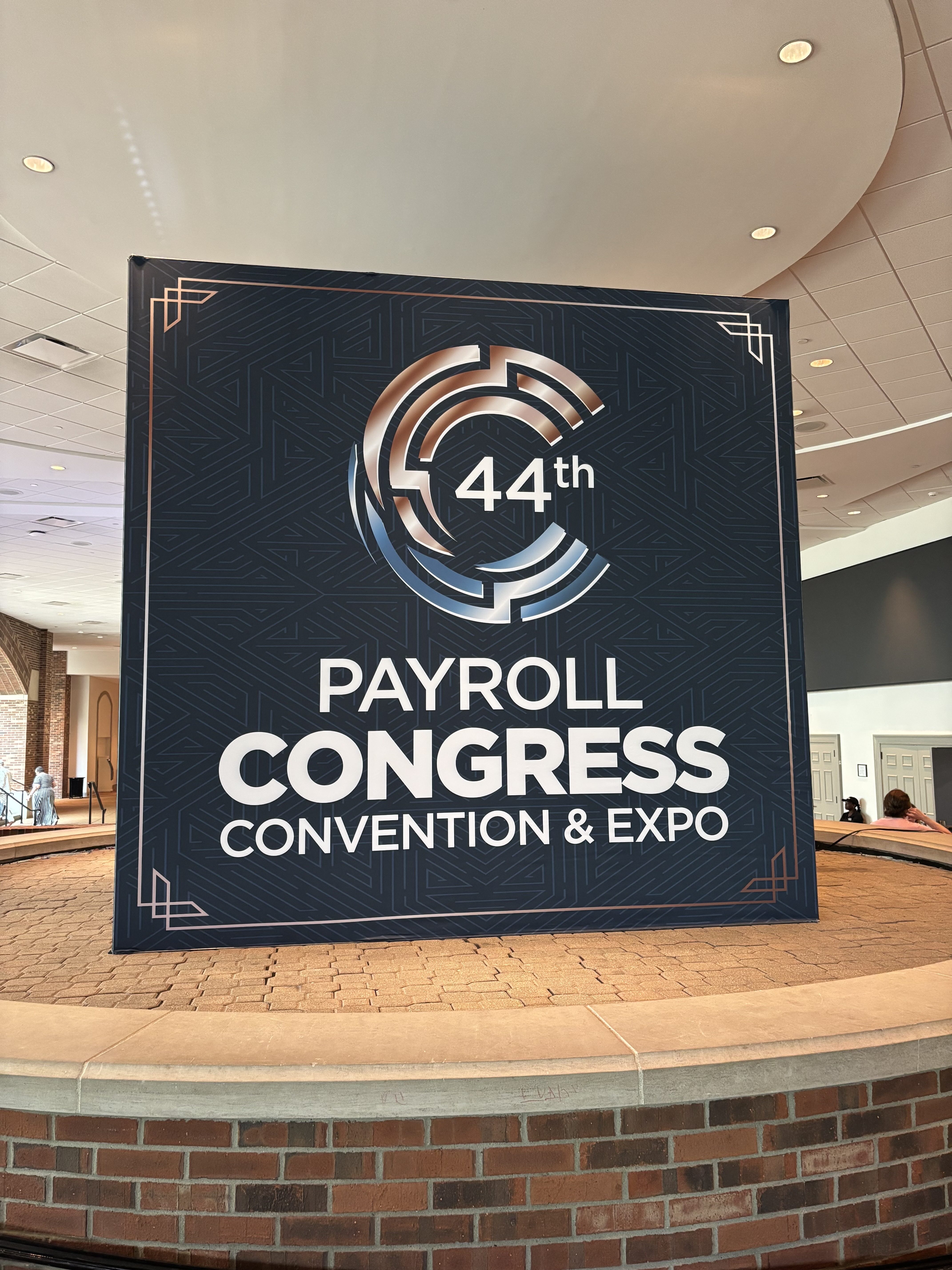
So in between coffee queues and panel sessions, here are the questions I keep being asked — and the answers I keep giving.
Q: We've just opened payroll in five new countries this year. We don't have local entities or local bank accounts in any of them. What now?
You don't need them. That's the punchline.
The old model said: every country needs a local entity, a local bank, a local file format, a local provider. That model is what keeps payroll teams up at night and finance teams in spreadsheet purgatory.
Payment curation does the opposite. One contract, one API, one platform — and underneath it, the optimal local rails for every market your people live in. We settle in 130+ currencies across 200+ territories, with 80+ markets reachable on same day or realtime rails. You expand into a new country; we don't make you build new plumbing for it.
If your "global payroll strategy" still involves opening another international bank account, you're solving the wrong problem.
Q: Statutory and tax payments are eating my team alive. Different filings, different windows, different methods in every market. How do we stop bleeding hours on this?
Honest answer: stop treating statutory and tax as a separate workflow.
This is the part of payroll that's been quietly ignored for years. Calculations get all the attention. Reporting gets the conferences. But the act of actually moving the tax to the authority, on the day the authority wants it, in the format they accept — that's where most of the operational risk lives, and it's where most teams are still patching it together by hand.
Navro Statutory & Tax was built for this. It's the first service available globally to fulfil mandatory tax deductions, statutory payments and regulatory reporting alongside payroll payouts in a single payment flow, across 95 countries. Your team runs one process. The platform handles the country,specific files, formats and deadlines underneath.
When the calculation, the payout and the statutory payment all leave through the same flow, you stop reconciling them after the fact. You stop chasing them through three different providers. And you stop being the team that gets blamed when the tax authority gets paid late through no fault of your own.
Q: Payroll always gets blamed when a payment lands late or short, even when it's clearly the bank's fault. How do we get out of that?
By making the payment visible.
Most of the trust problem in payroll is actually a visibility problem. A payment leaves your system. It disappears into a correspondent banking chain. Three days later your employee pings you on Slack because they're $42 short and don't know why. You don't know either, because nobody can see what happened to it in between.
Realtime payment status, downloadable Proof of Payment, reason codes the helpline can read out loud. That's the difference between "we'll investigate" and "here's exactly what happened." It's the difference between payroll being a cost centre and payroll being trusted.
Find it, fix it, prove it, faster. Visibility is the cheapest performance upgrade your function will ever buy.
Q: AI in payroll — is it actually moving the needle, or are we all just on a hype cycle?
Both. The hype is real, and so is the value — they're just in different places.
Where AI is genuinely changing payroll right now: payment exception handling — returns, mismatched references, name discrepancies — reconciliation against country,level ledgers, and pattern recognition on the long tail of repeating issues your senior people shouldn't be touching. It frees experienced payroll professionals to do what only they can do: complex cases, governance, the judgement calls.
Where the hype gets in the way: anything that promises to replace the judgement call. Payroll is a judgement function dressed up as a calculation function. Don't outsource that to a model. Outsource the things underneath it.
Q: You work at a payments company. Be honest — why should a payroll person care?
Because every other part of payroll has already been modernised. Calculation. Compliance. Reporting. Employee experience. The last part still running on infrastructure designed in the 1970s is the payment itself.
When the biggest global payroll providers in the world — our recent partnership with Strada being the latest — choose to embed payments execution directly into their platforms, it's because they've reached the same conclusion their customers reached years ago. Payroll calculation isn't the bottleneck. Payment execution is. Closing that gap is the difference between modern payroll and end,to,end payroll.
That's the work. That's why I'm here.
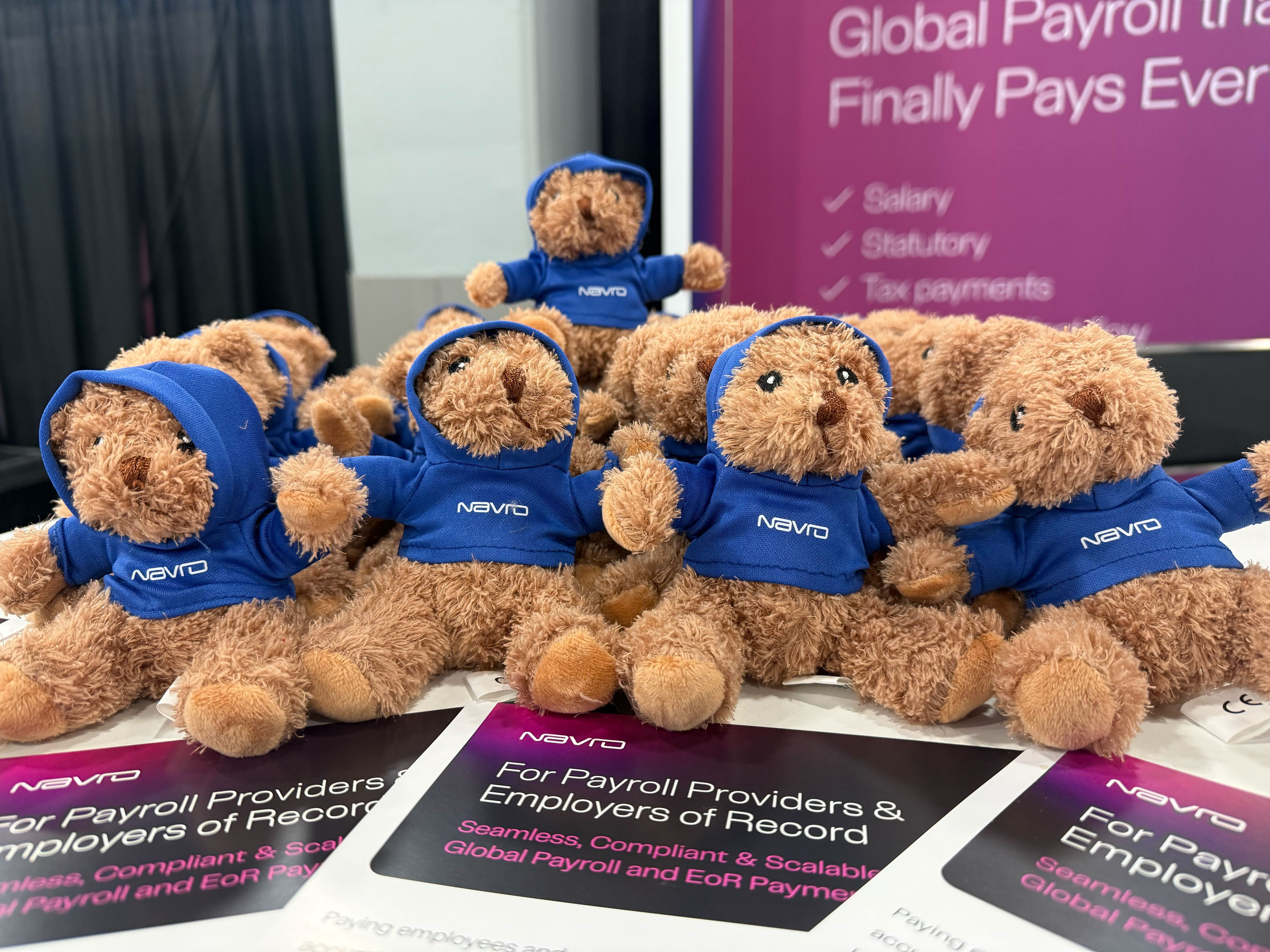
Find me on the Congress floor. I'm at Payroll Congress in Nashville all week — happy to talk through any of the above, or any of the things you'd rather not put on a panel. Grab me for a coffee.
And if you'd like to see what end-to-end global payroll actually looks like when the payment is built in, not bolted on:
Replace bank-route uncertainty with local rails, real-time tracking and statutory payments in the same flow — and give every employee, in every market, the right amount on the right day.
See how Navro powers end-to-end payroll